From South Hills estates and Greenbrier Valley horse farms to ridge-top farmhouses in the northern panhandle gas country, WB Lightning Rods protects West Virginia properties statewide — the way we’ve protected farms and fine homes since 1950.
West Virginia is the Mountain State, and in mountain country almost everything sits on high ground. Storm lines roll up the Ohio River valley, cells build over the Allegheny highlands and break across the ridges, and the eastern panhandle takes humid Atlantic storm flow up against the Blue Ridge. The buildings at risk are the ones WB knows best: barns and silos standing alone on ridge tops, horse farms with miles of fencing, lakefront and estate homes whose chimneys stand above the tree line, and farmsteads spread across the gas country of the northern panhandle.
WB Lightning Rods works all over West Virginia — Charleston and the Kanawha Valley, Huntington and the tri-state, Morgantown and the north-central counties, Shepherdstown and the eastern panhandle horse country, Lewisburg and the Greenbrier Valley, and Wheeling and the Ohio River counties. We protect the whole property: the house, the barns, the shops, and the trees that shade them, every building designed into the plan. Every system is installed by our experienced crew and personally supervised by the owner, and many quotes are built from satellite imagery, so getting protected starts with one call.
In West Virginia, elevation is everywhere — and elevation is exposure. A farmhouse, a barn, and a silo on a ridge top are the highest points for a mile in every direction, exactly where a storm makes contact first.
A working barn holds animals, feed, and equipment worth far more than the building. Timber framing and hay storage make a barn strike a worst case — and big barns and silos are usually the tallest structures on the farm.
Ohio River storm tracks, mountain cells over the Alleghenies, and Atlantic flow against the panhandle — West Virginia takes summer weather from every side, all season long.
One company for the whole property — homes, farms, barns, trees, and every building in between, anywhere in West Virginia.
Complete lightning rod systems for houses of every size, designed around your roofline — the work WB has done since 1950.
Low-profile systems designed around fine architecture, slate, tile, and metal roofs — from South Hills and Cheat Lake to Shepherdstown and Lewisburg.
Discreet, low-profile systems for older farmhouses and historic homes — clean runs along rooflines and downspout lines, protection you have to look for to see.
Barns, stables, and arenas protected along with the residence — horses, hay, and tack, all covered.
Agricultural buildings, equipment shops, and hay storage — the tallest structures on the farm, and the ones lightning finds first.
We protect all of your buildings — main house, barns, shops, guest houses, and outbuildings — with a lifetime of protection. Multi-building packages price the whole property together, so protecting everything costs less than protecting buildings one at a time.
Mature oaks, maples, and specimen trees protected with their own terminals and grounding, so a shade tree never becomes the strike path to your roof.
Neighbors who install together save together — neighborhood discounts on multi-home packages for your street, road, or lake shore.
Complete installations and repairs — that’s the work. Already have a system? We inspect it, repair storm damage and wear, and bring older installations up to current NFPA 780 standards. We make old systems great again.
Building new? We design and install protection while the home or barn is going up — cleaner cable runs, nothing retrofitted after the fact.
Every part of the system works together — rods on the roof, low-profile cables, and deep-driven grounds carry a strike safely into the earth.
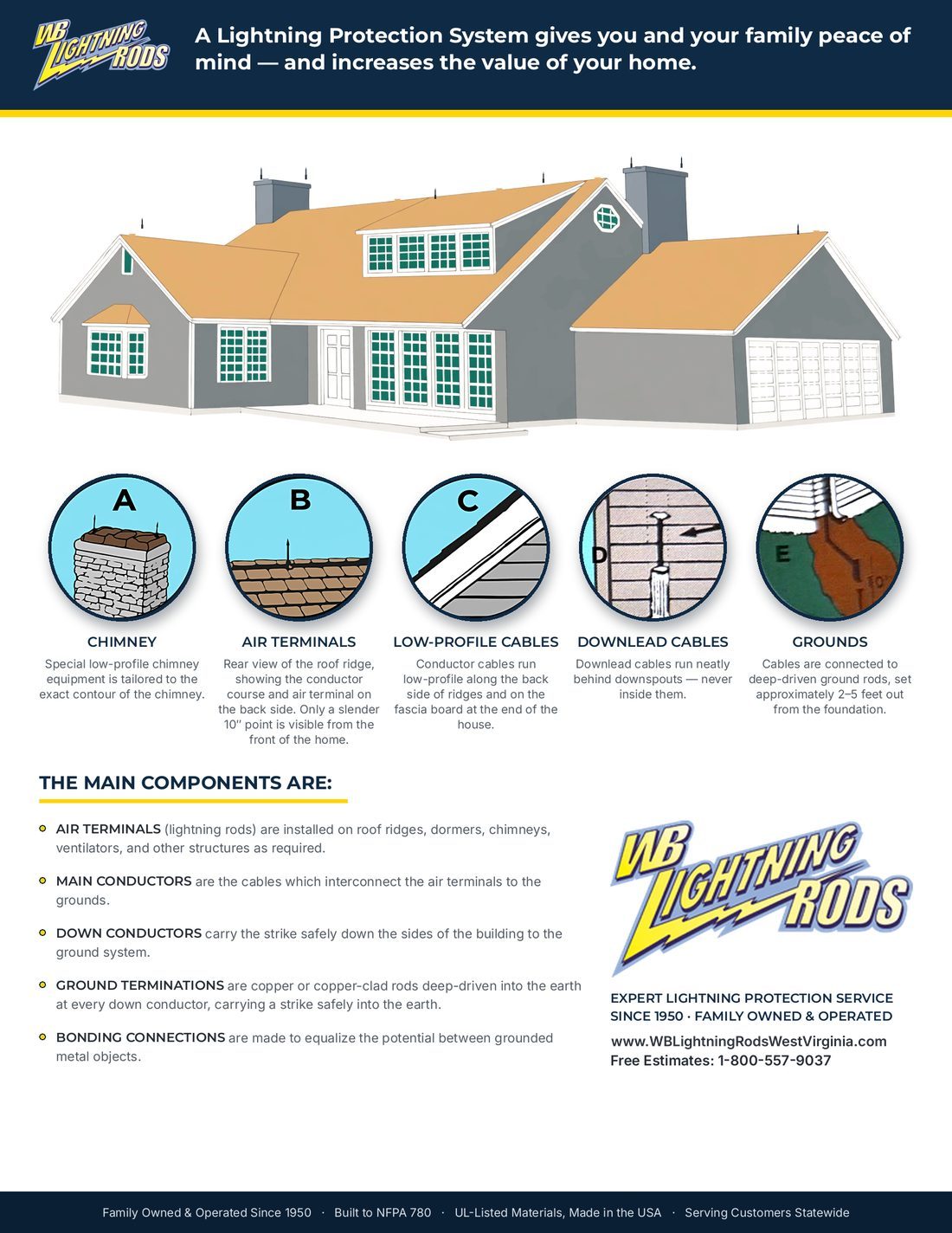
Every WB system is built to NFPA 780 guidelines using UL-listed materials made in the USA — and designed for West Virginia specifically, not copied from a template.
Placed along rooflines, chimneys, cupolas, barn ridgelines, and silos — the high points lightning seeks first on West Virginia properties.
Heavy conductor cables routed cleanly along rooflines and downspout lines, carrying strike energy safely down and away from the structure.
Deep-driven ground rods at each structure, sized for local soils — from Kanawha Valley clay to the rocky Allegheny plateau and Greenbrier limestone — so strike energy disperses safely into the earth.
Metal roofing, gutters, water lines, and electrical services bonded to the protection system, so stray current can’t side-flash between metal parts.
Barns, pole barns, equipment shops, guest houses, and silos incorporated into the property plan — no building left exposed.
WB’s West Virginia work follows the state’s own geography. In the east it’s the panhandle — Shepherdstown’s historic homes, Charles Town horse country, and Martinsburg’s growing custom-home communities. Across the north it’s Morgantown and Cheat Lake, Bridgeport and Clarksburg, and the gas-country farmsteads of the northern panhandle down the Ohio River through Wheeling and Parkersburg. In the south and west it’s Charleston and Huntington, the Kanawha and Ohio river hills, and the farm valleys of the Greenbrier and Monroe country.
Wherever your property sits, the approach is the same: the whole property protected under one plan, priced together so multiple buildings cost less per building, and installed by our own crew under the owner’s personal supervision. A dairy farm in Greenbrier County and an estate in Shepherdstown are one call, one company.
Six regions, one crew, one standard of work — pick your part of the state.
Estates in South Hills, homes across Charleston and the valley suburbs — Hurricane, Teays Valley, Cross Lanes, and Winfield — protected with low-profile systems that respect the architecture.
Homes and farms from Huntington and Barboursville out through Ona, Milton, and Wayne County — river-hill homes and Ohio River farm country.
Cheat Lake lakefront homes, Morgantown custom homes, and the farms and fine homes of Bridgeport, Clarksburg, Fairmont, and Preston County.
Historic Shepherdstown, Charles Town horse country, Martinsburg, and Harpers Ferry — estates, horse farms, and custom homes within sight of the Blue Ridge.
Lewisburg and White Sulphur Springs estates, Greenbrier resort-area homes, and the horse and dairy farms of the Greenbrier and Monroe County valleys.
Wheeling and the Ohio River towns, Parkersburg and the Mid-Ohio Valley, and Marcellus gas-country farms across Marshall, Wetzel, Tyler, and Doddridge counties.
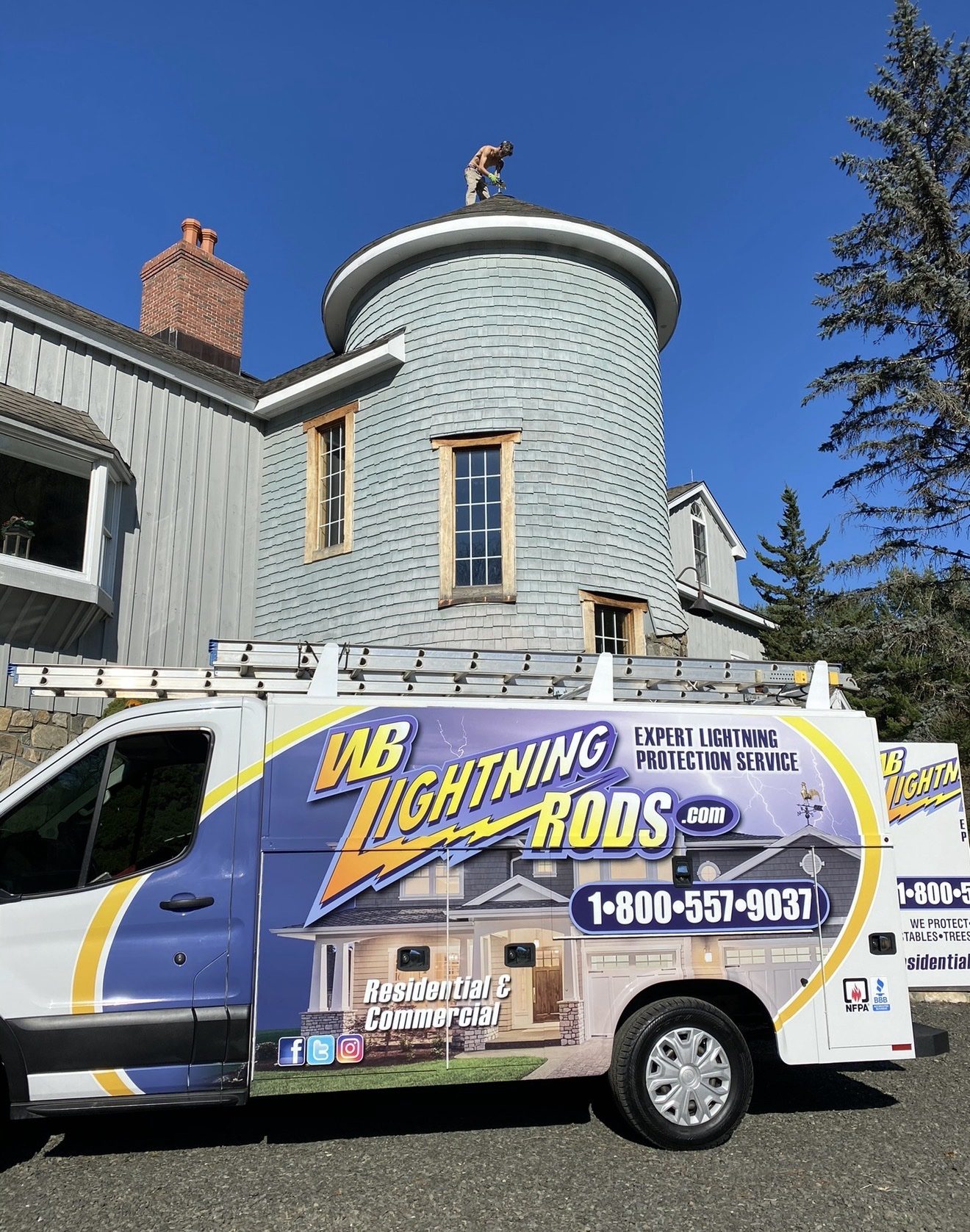
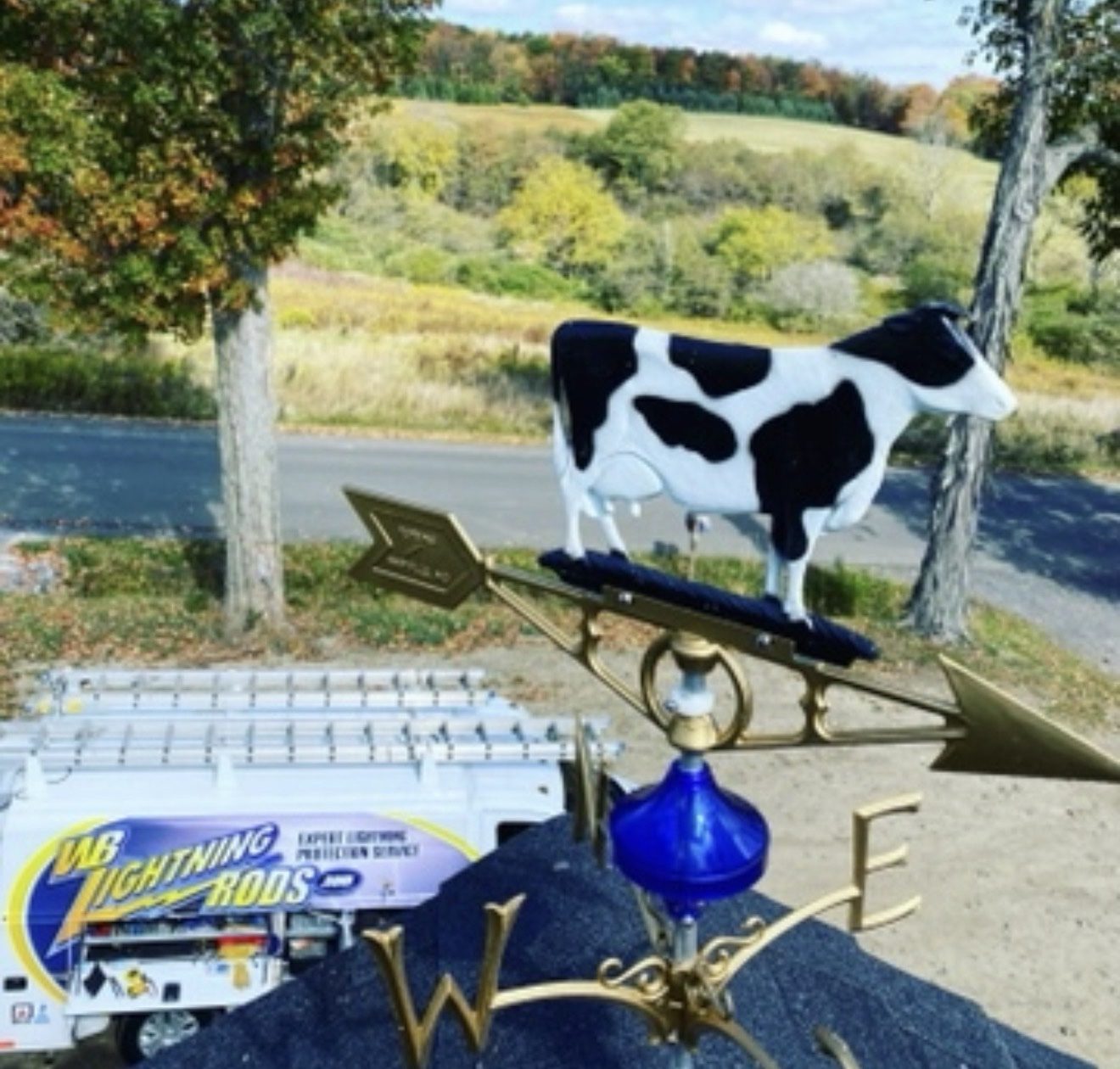
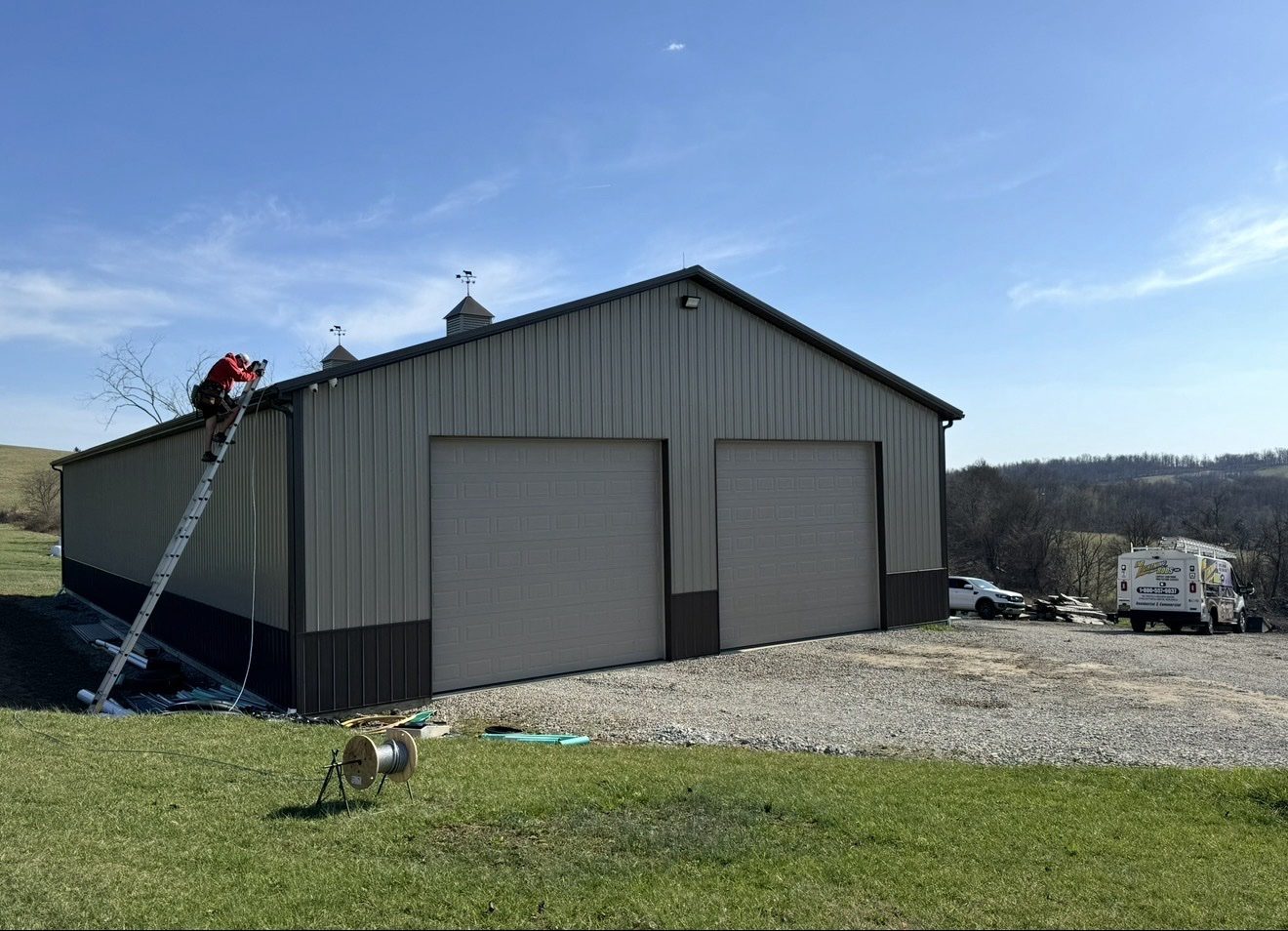
Real WB installations by our own crew — estate homes, dairy barns, horse farms, and pole barns.
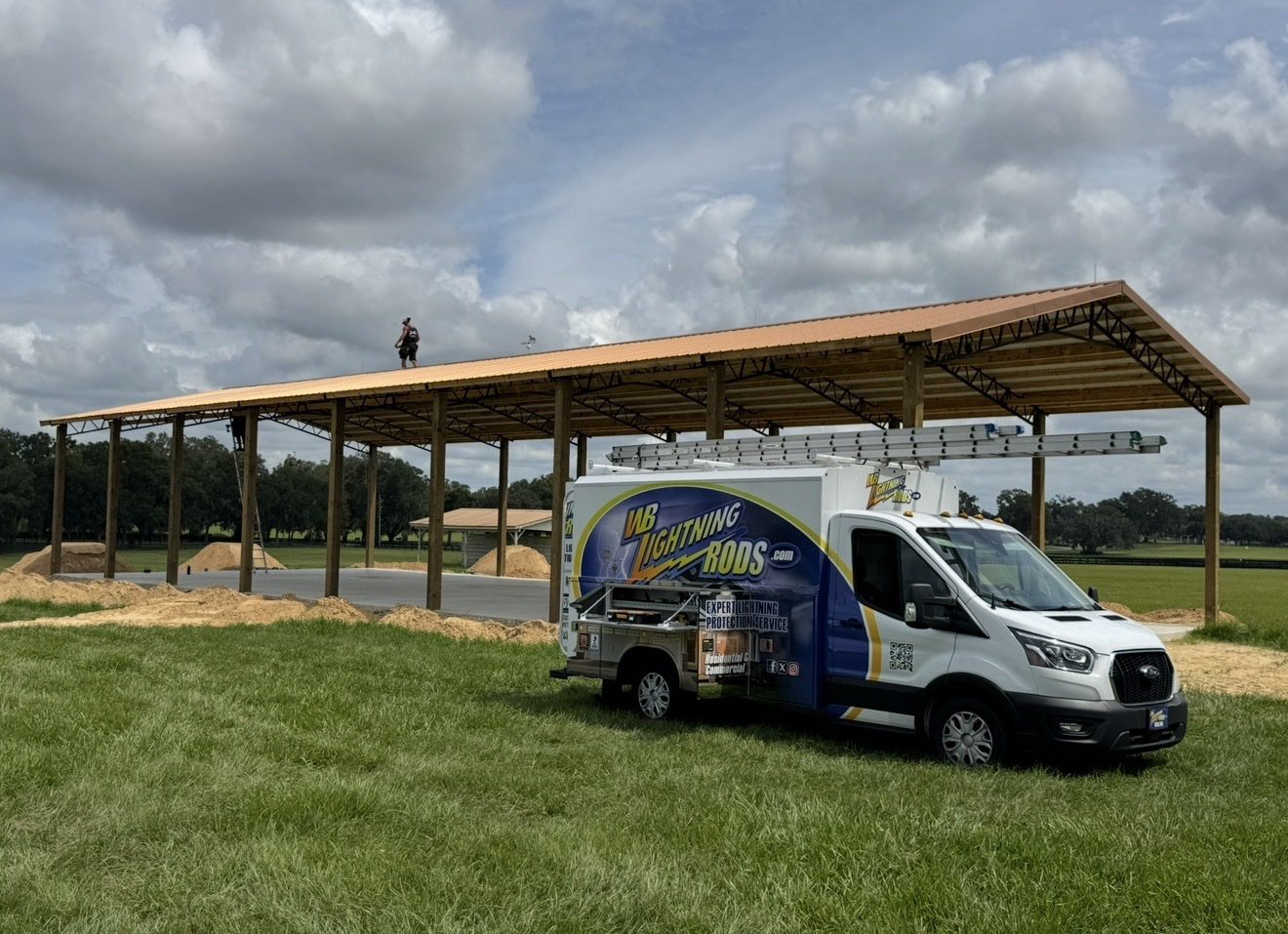
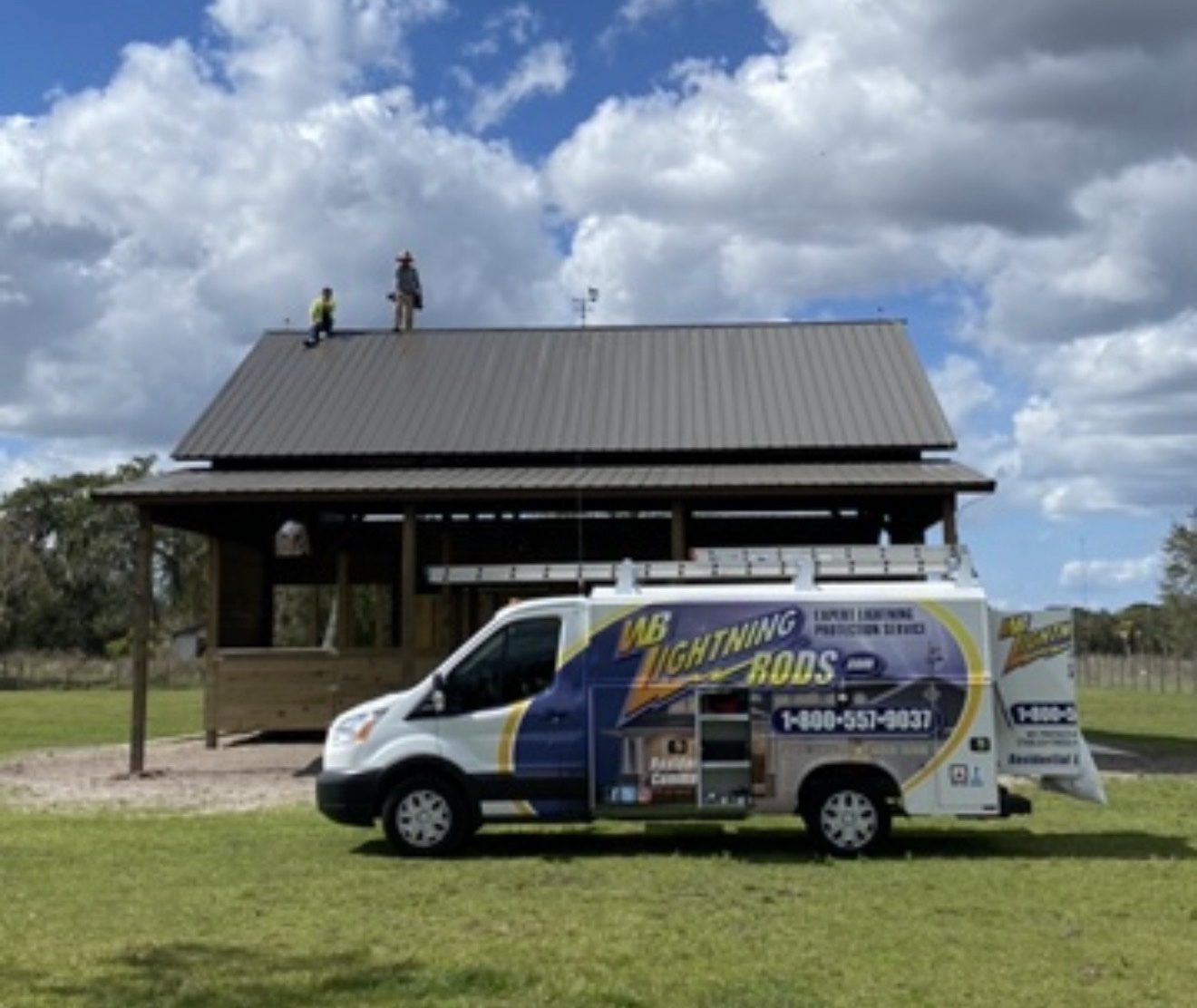
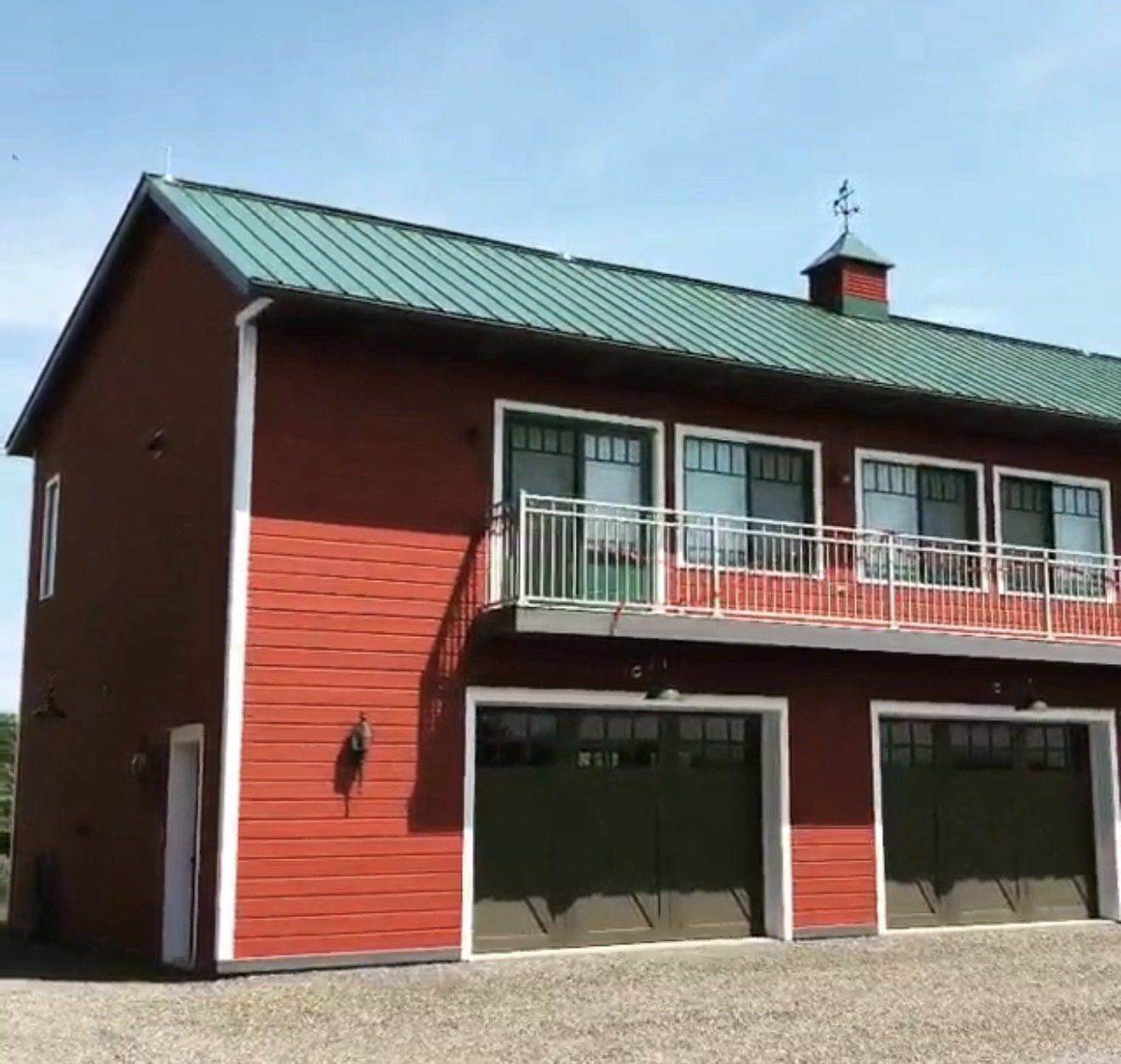
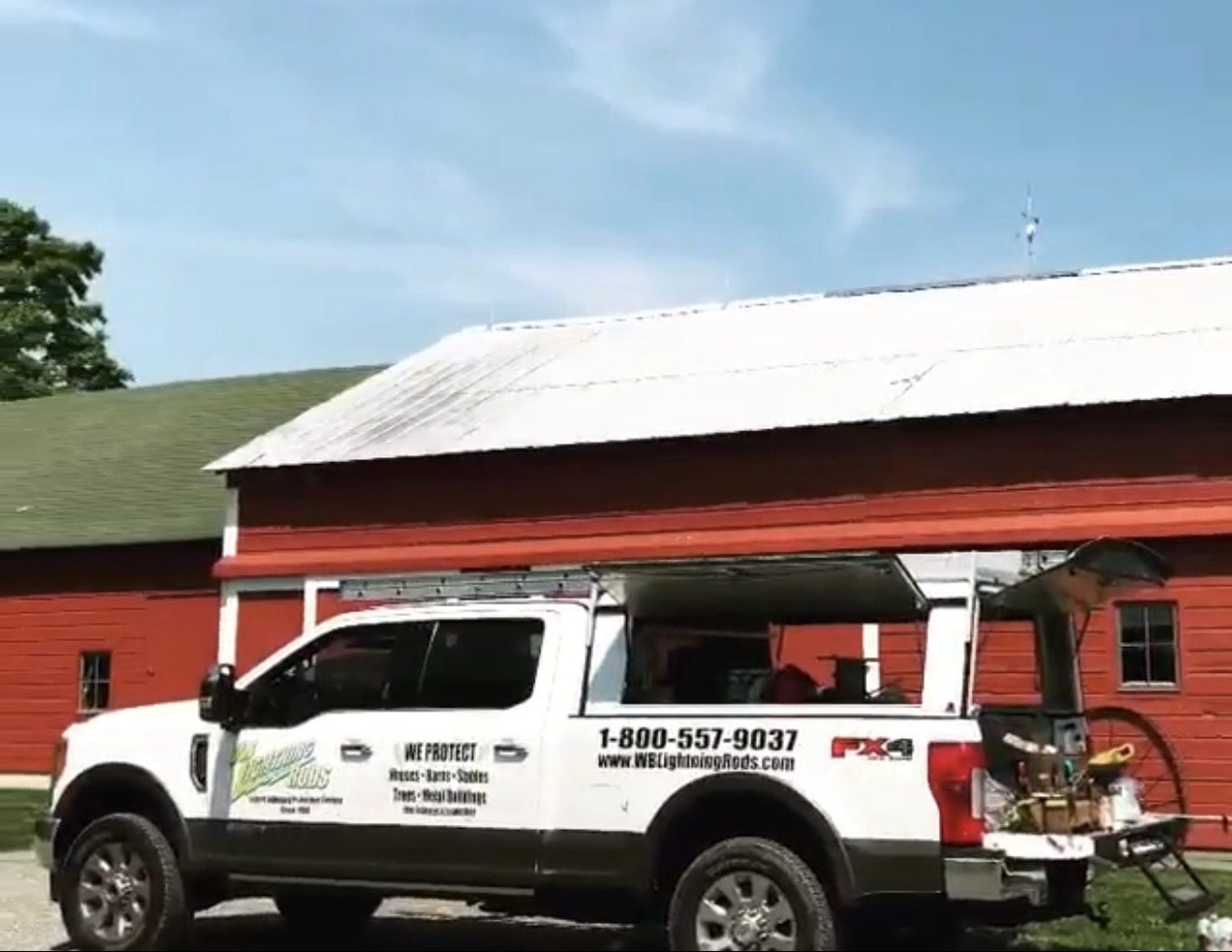
Many quotes are built from satellite imagery of your home — fast, accurate, and no obligation. Call 1-800-557-9037.
Our experienced crew installs the system, and every installation is personally supervised by the owner, start to finish.
Lifetime warranty on parts and labor, with a 5-year maintenance check at no cost. Then you watch West Virginia storms the calm way.
Yes — WB serves all of West Virginia, statewide. Our crews run Charleston and Huntington, Morgantown and the north-central counties, the eastern panhandle, the Greenbrier Valley, and the Ohio River counties on regular routes, and many quotes are built from satellite imagery so distance never slows down getting your estimate.
Price depends on roof size and complexity, the number of buildings, and grounding conditions. Farm and estate packages price multiple buildings together, which brings the per-building cost down. Estimates are free — many are built from satellite imagery of your property — and every system carries a lifetime warranty on parts and labor.
Yes. When several homes on the same road or ridge install in the same trip, everyone shares the travel and setup — and we pass that saving on as a neighborhood discount on multi-home packages. It’s the most affordable way to protect a whole road, and it only takes one organizer to get it started.
That’s our specialty. Multi-building packages for farms cover the farmhouse, dairy or horse barns, pole barns, shops, and silos under one plan — we protect all of your buildings, with a lifetime of protection, and pricing the property together costs less than protecting buildings one at a time.
Yes. A strike to a nearby tree, fence line, or the ground itself — or one that hits utility lines down the road — can send a damaging surge through wiring, well pumps, and electronics. That’s why grounding and bonding matter as much as the rods on the roof: a properly grounded system gives strike energy a direct, controlled path to earth at the structure itself.
Yes. A tall tree close to a house or barn can side-flash a strike into the roof, or send current through its roots toward the foundation. We install lightning protection for trees themselves — their own terminals and grounding — and we factor nearby trees into every property design.
Rated 4.9 stars with 300+ verified Angi reviews, and a BBB A+ accredited business. Two recent Google reviews:
“William and his team are the best! They took care of it end-to-end. Very pleasant to work with and competent to trust with the lighting rod installation. Highly recommend!”
“Couldn’t have been easier. Efficient, clean, courteous, and friendly.”
Getting protected is quick. Tell us about the property and we’ll call you back with a free, no-obligation estimate — anywhere in West Virginia, statewide.
Rather talk it through? We’re one tap away.
Call 1-800-557-9037Your request is in. If you’d rather talk now, we’re one tap away.
Call 1-800-557-9037WB Lightning Rods works across West Virginia year-round — West Virginia is one stop on a statewide route.
Free estimates anywhere in West Virginia. Summer storms build fast over the ridges and the river valleys — be ready before the next one rolls through.
Get My Free Estimate 1-800-557-9037